Adolescents have a voice if we create a space to listen to them – co-planning a water refilling approach with adolescents and teachers

Our future is at hand, let’s move forward together – learning from what works

As the world observes Global Handwashing Day, the NIHR Global Health Research Group highlights ongoing efforts in Malawi to improve handwashing with soap among adolescents—where less than 1% of observed handwashing opportunities currently include soap use. Using the COM-B behaviour change approach, researchers are co-developing a participatory hand hygiene intervention with students and teachers in rural Mchinji to make handwashing easier, more appealing, and consistent. Through hands-on experiments testing soap types, dispensing methods, and behavioural nudges, the study revealed key preferences and practical challenges. These insights are now guiding a Trial of Improved Practices (TIPs) to create a sustainable, evidence-based solution that empowers young people to make handwashing with soap a lasting habit, truly putting “our future is at hand.”

Celebrating Mental Wellbeing in Young People Using Creative Storytelling in Blantyre, Malawi

As the world marked World Mental Health Day on 10th October, the NIHR Global Health Research Group’s ‘Inspiring Adolescent Wellbeing’ Work Strand in Blantyre, Malawi, celebrated the power of creative storytelling in nurturing young people’s joy, resilience, and belonging. Using the Scottish Storyline methodology, children expressed their emotions and ideas through drawings, drama, and poems – creating safe, inclusive spaces where their voices were heard and valued. The workshops reminded us that mental wellbeing flourishes not only through addressing challenges but also by celebrating creativity, play, and the joy of connection.

“Mental Health Effects of WASH Conditions on Adolescents in Primary Schools in Malawi.”

One of our Early Career Researchers Shadrick Masulani has just given his first national conference presentations and here are some of his insights a reflections!"This year marked a special milestone in my research journey as I had the opportunity to present at two...

REFLECTIONS ON MY FIRST INTERNATIONAL CONFERENCE: ICN CONGRESS 2025 IN HELSINKI, FINLAND

REFLECTIONS ON MY FIRST INTERNATIONAL CONFERENCE: ICN CONGRESS 2025 IN HELSINKI, FINLAND Attending an international scientific conference for the first time is a defining moment in any academic journey. As a PhD student based in Malawi, I had the privilege of...

Adolescent Wellbeing and the Future of African Health Systems: Reflections from the African Health Economics and Policy Association 7th Scientific Conference, 10-14th March 2025, Kigali, Rwanda

I had the privilege of attending and presenting at the African Health Economics and Policy Association (AfHEA) Conference in Kigali, Rwanda. Under the theme “Resilient and Strong African Health Systems: Contributions of Health Economics and Health Policy,” the...

Bridging Theory and Practice: Malawi Youth Officers’ Journeys Through the CYC Masters Programme

'So far my classes are progressing very well' remarks Joseph Manthalu, 'we have completed three modules for the first year and we will now be going into the second year'. Joseph D. Manthalu - Rural Mchinji, Malawi District Youth Officer In my role as a Youth...

World Wellbeing Week 24 – 30th June 2025: Understanding Adolescent Wellbeing in Malawi

In recognition of World Wellbeing Week, our Global Health Research Group shares insights into what wellbeing actually means to adolescents in Malawi.
Through in-depth interviews and group discussions, young people described wellbeing as feeling emotionally safe, respected, supported by family and peers, and having their basic needs met. But they also highlighted the realities of poverty, domestic stress, and limited opportunities that continue to impact their emotional and social wellbeing.
These perspectives are shaping our approach to designing youth-led, contextually relevant interventions.
Read our blog to learn more on these initial findings

Engineering a fresh path: my PhD journey to exploring adolescent health and behaviour science.

From water pumps to wellbeing, I never imagined my engineering journey would lead me here.
Chasing a long-standing passion for WASH, I stepped into the world of adolescent health – armed with technical skills, a curious mind, and a growing desire to drive real change.
Starting a PhD remotely from Tanzania, disconnected from peers in Glasgow and Malawi, left me wondering: how would I fit in?
Between parenting, packing, and pivoting into behavioural science, I found myself learning not just how to research – but how to listen, adapt, and connect.
This is not just a story about water or sanitation – it’s about finding my place in global health, and why centring adolescents is reshaping everything I thought I knew.

NIHR-GHRG Steering Group Meeting 2025

The NIHR-GHRG Steering Group Meeting 2025 brought together researchers, policymakers, and institutional partners in Blantyre to reflect on progress, share insights, and shape the next phase of work to improve adolescent health and wellbeing in Malawi. With presentations across six Work Strands and leadership from key ministries, the meeting reaffirmed a shared commitment to youth-centred, evidence-driven impact.

It’s not just a process! Co-designing workshops also strengthens Mental Health

“It’s Not Just a Process: Co-Designing WASH Interventions Also Strengthens Mental Health”

During Mental Health Awareness Week, NIHR-GHRG Work Strand 4 (WASH and Adolescent Health) reflects on how community-led co-design workshops have supported more than just sanitation solutions – they’ve nurtured adolescent mental wellbeing.

By bringing together adolescents, parents, teachers, health workers, and local leaders to collaboratively design interventions, we created safe, inclusive spaces where young people felt heard and valued. Discussions around menstruation, bullying, and hygiene facilities became gateways for building trust, empathy, and dignity—key pillars of mental health.

This experience reinforces a vital truth: community-driven participation isn’t just about solving problems – it’s a powerful act of collective care.

February 13, 2026

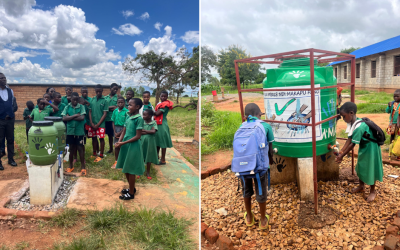
Our New Year began with a co-planning meeting at the primary school in Mchinji where we have been implementing our hand hygiene Trial of Improved Practices (TIPs). An issue highlighted during the TIPs was refilling the water containers in the handwashing stations-these structures have no direct water source and have to be filled by the learners with water drawn from the borehole.

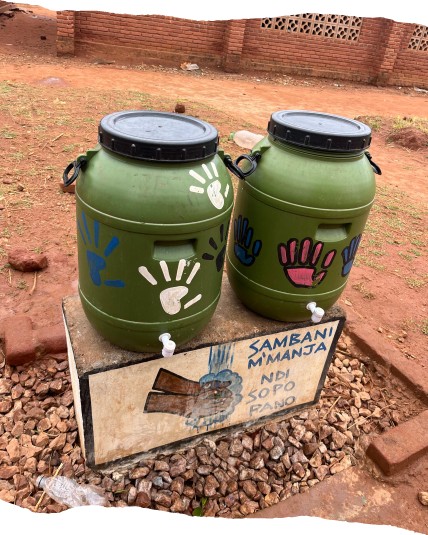
De-centralised handwashing facility-these have been implemented as part of the TIPS with handwashing reminders painted on the base.

Our meeting brought together peer educators (selected adolescents for different classes) and teachers. Yes, children and adults co-planning in one room! We were cautious in our approach, especially as listening to the views of young people is not common in rural Malawi, but we needn’t have worried, as one thing soon became clear: adolescents have a voice, and adults need to listen to them and take their opinions seriously.

We began the meeting with introductions and a clear explanation of its purpose. A key emphasis was creating a safe space for adolescents to express their views. They were encouraged to feel free to share anything and not to be intimidated by the presence of teachers. We asked them to see teachers as friends and partners in the discussion. At the same time, teachers were encouraged to listen attentively to adolescents’ voices and to genuinely consider their ideas.

The co-planning meeting focused on the water refilling approach for handwashing facilities. Findings from the TIPs endline data revealed challenges related to the practicality of the refilling approach that the school had selected and implemented. However, for a successful handwashing intervention, it was critical to understand what approach would work in practice.

The meeting therefore provided a platform to hear directly from those responsible for water refilling at the school. Learners were given the opportunity to suggest improvements they felt would be realistic and sustainable. Previously, the school had implemented a class-by-class duty roster for refilling water at handwashing facilities near the toilets, classrooms, and where learners buy snacks with the school. Despite this, inconsistent refilling was observed, and water for handwashing was not always available.

One important question was posed: “Why are we still experiencing inconsistent refilling when we already have an approach that we put in place ourselves, and what can be done differently?” They had chosen a class by class a day duty roster water refilling approach.

The room fell silent, but only briefly. What followed was a lively discussion, with learners being the first to speak up. By the end of the meeting, both learners and teachers agreed to continue with the existing approach, but with several key improvements, most of which were suggested by the learners themselves. They asked teachers to remind them of their duties and suggested that hard copies of the duty rosters be printed and displayed in each classroom. When teachers raised concerns about water refilling containers being left scattered around the school premises affecting the school’s appearance, learners quickly proposed a solution: they would store the containers in a room that was not in use. Teachers also agreed to take turns in supervising the learner to ensure water refilling is consistent.

As the days go by, everyone is eager to see whether these agreed-upon improvements will result in more consistent refilling. One thing, however, is already clear: adolescents do have a voice. When given space, they can express themselves thoughtfully and responsibly. They simply need adults who are willing to listen.

More from us ….