Every year on 28 May, the world commemorates Menstrual Hygiene Day to raise awareness about the importance of menstrual health and hygiene (MHH). In 2026, the global theme “#PeriodFriendlyWorld” calls on governments, communities, schools, health systems, researchers and development partners to create environments where menstruation is managed safely, hygienically and with dignity.
Menstruation is a natural biological process experienced by millions of girls and women worldwide. Yet for many adolescents, especially in low-resource settings, managing menstruation remains difficult due to stigma, inadequate facilities, lack of information and limited access to menstrual products. These challenges affect not only their health and wellbeing, but also education, confidence and participation in daily life.
Our ongoing study on Adolescent Health and Wellbeing in rural and urban Malawi highlights important menstrual hygiene management gaps that continue to affect adolescent girls.
What Our Study Found
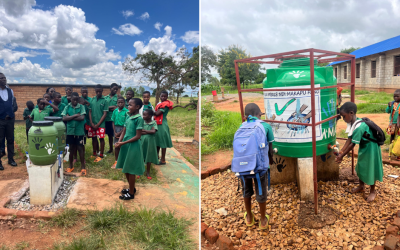
While examining and understanding the current status of adolescent health and wellbeing, and how this is influenced by water, sanitation and hygiene (WASH), our study revealed that many schools still lack the basic infrastructure and resources necessary to support menstrual hygiene management.
Out of 10 schools assessed, only 3 (all in urban areas) had menstrual hygiene management change rooms. In the remaining seven schools, (two in urban and five in rural areas), girls relied on ordinary toilets that lacked privacy and dignity. This means that the majority of adolescent girls did not have a safe, private and comfortable space to change menstrual materials during school hours. Further, none of the schools assessed had a handwashing facility, water or soap accessible close by for menstrual hygiene management.
The study also explored the menstrual products commonly used by adolescent girls. Findings showed that:
- 49% used cloth materials
- 28% used disposable sanitary pads
- 23% used reusable pads
The findings highlight the continued reliance on improvised or reusable materials driven by financial constraints and inconsistent access to affordable menstrual products.
Beyond inadequate infrastructure and lack of products, the study also revealed the emotional and social challenges girls face during menstruation. During discussions, some girls shared that they sometimes avoid classes during menstruation due to fear of staining their clothes and bullying from peers. “Here at school when you have a period stain on your clothes some boys laugh at you, others do not say anything but when they are in their groups, they may say certain things and some point at us maybe when you are walking (Adolescent, menstruating girl-School-IDI)”.
Another adolescent boy emphasized the same; “… when the girl is on her period, they start teasing her to get their revenge ….Girls also tease each other but it’s mostly done by boys….Those who hate her even before her puberty use this chance to tease her (Adolescent boy-School)”.
The study highlights how the adolescent girls’ wellbeing may be affected by menstrual health and hygiene challenges. To achieve a period friendly school environment, we need to address the inadequate water, sanitation and hygiene (WASH) services in schools.
Why These Findings Matter
Menstrual hygiene is not only a health issue; it is also an education, gender equality and human rights issue. When schools lack private changing spaces, clean water, soap and disposal systems, girls may feel embarrassed, anxious or unsafe during menstruation. Some may miss classes or stay home entirely, negatively affecting attendance, concentration and academic performance.
The continued use of cloth materials among many girls also reflects broader economic and social inequalities. While reusable menstrual products can be safe and sustainable when properly managed, inadequate changing facilities can make safe use difficult.
What Needs to Be Done
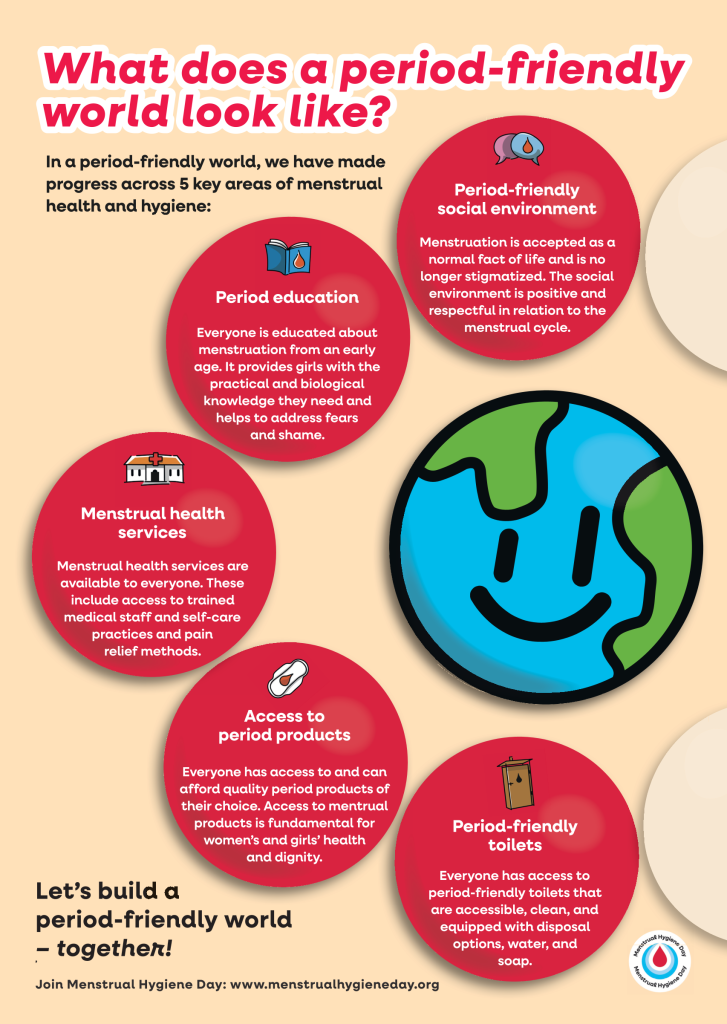
To achieve a truly #PeriodFriendlyWorld, stakeholders must prioritize:
1. Improved School Infrastructure
Schools need private and safe menstrual hygiene management rooms, reliable water supply, handwashing facilities with soap, and proper disposal systems for menstrual materials.
2. Affordable Menstrual Products
Governments and partners should strengthen access to affordable menstrual products, especially for vulnerable and low-income adolescents.
3. Comprehensive Menstrual Health Education
Girls and boys need accurate information about menstruation to reduce stigma, myths and discrimination. Menstrual health education should be integrated into school and community programs.
4. Community Engagement
Parents, teachers, traditional leaders and religious leaders all have a role in creating supportive environments where menstruation is discussed openly and respectfully.
A Call to Action
As the world commemorates Menstrual Hygiene Day 2026, our study serves as a reminder that many girls are still managing menstruation under difficult conditions. A #PeriodFriendlyWorld can only become reality when every girl has access to safe spaces, clean water, menstrual products, accurate information and supportive communities. No girl should miss school, feel ashamed, or struggle to manage her period with dignity. On this Menstrual Hygiene Day, let us move beyond awareness and commit to meaningful action that supports adolescent girls’ health, education, and wellbeing. Together, we can create schools and communities where menstruation is no longer a barrier to opportunity and dignity.
#PeriodFriendlyWorld #MHDay2026 #MenstrualHealth #MenstrualHygiene #GirlsEducation #WASH #AdolescentHealth
Written by: Felistas Mpachika, PHD student, Kamuzu University of Health Sciences, Centre for Reproductive Health, Monica Nzanga, Malawi University of Business Studies and Applied Sciences, WASHTED