My Journey to an International Master in Project Management
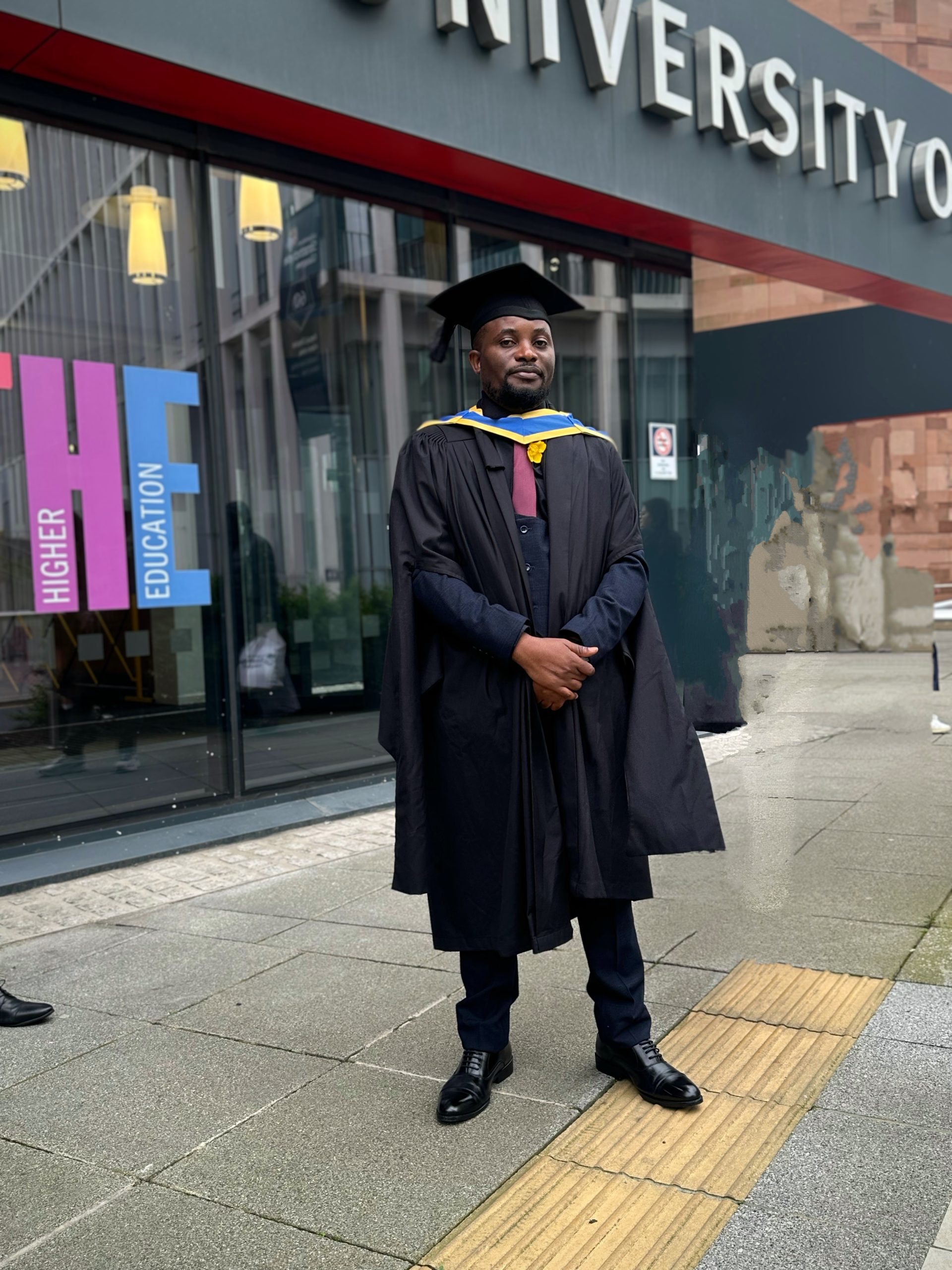
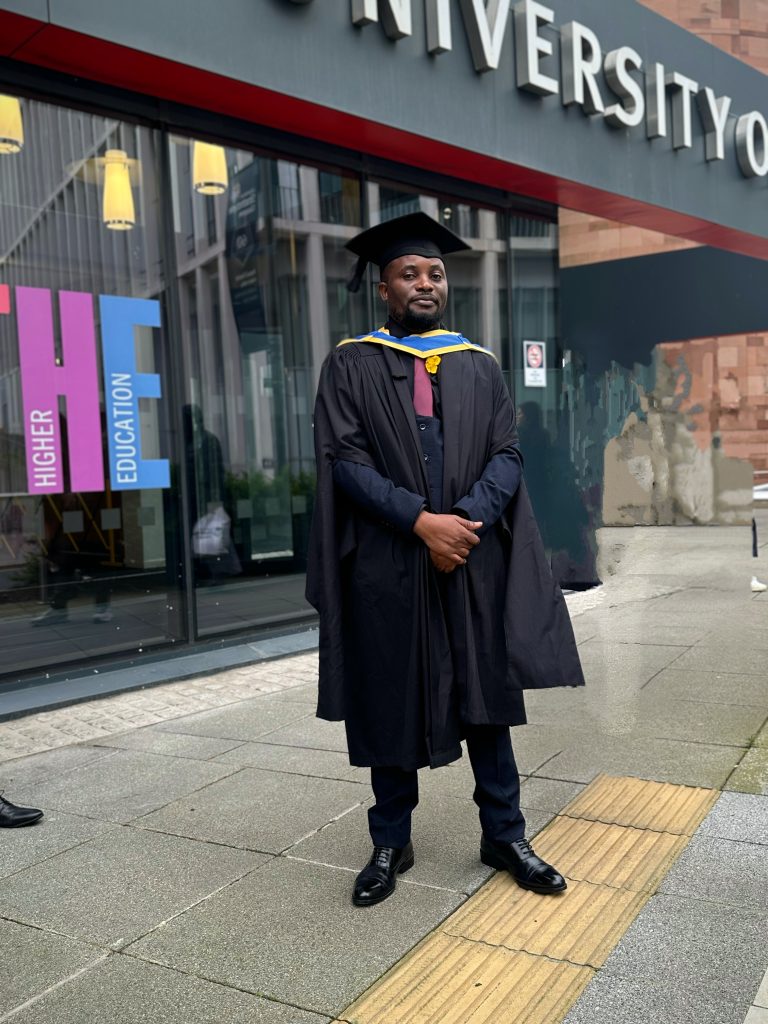
On 3 July 2026, I walked across a stage in Glasgow and collected a Master of Science in International Project Management with Distinction. In November, I will graduate again, this time at the Politecnico di Milano, in Italy. Two graduations for one degree feels like a fitting ending to a programme that spent eighteen months teaching me that a project rarely has just one home.
The Opportunity
At the Centre for Water, Sanitation, Health and Appropriate Technology Development (WASHTED) I sit at the intersection of research and administration budgets, donor compliance, contracts, and the constant work of holding multi-partner grants together. One of those grants is the NIHR Global Health Research Group on Improving Adolescent Health and Wellbeing in Malawi, co-led by Prof Tracy Morse at the University of Strathclyde and Dr. Effie K. Chipeta at Kamuzu University of Health Sciences. Like most well-designed global health programmes, the project through its capacity building component recognises that research partnerships do not become sustainable through funding alone, but through the people who run them. That component became my studentship. Through this programme I was chosen to study International Master in Project Management, which is jointly delivered by POLIMI Graduate School of Management in Milan and Strathclyde Business School in Glasgow. The programme runs for eighteen months, across two countries and three study periods.
Milan
I left a Blantyre still shaking off the dry season and landed in a city of trams and a cathedral that looks
carved rather than built. Our cohort came from Europe, Africa, Asia and the Americas. During this phase
of study, I discovered that “the way projects are carried out” is not a universal statement. What counts
as an acceptable delay, how directly you escalate a problem and how a team makes a decision: all of it
is different depending on where you learned it.
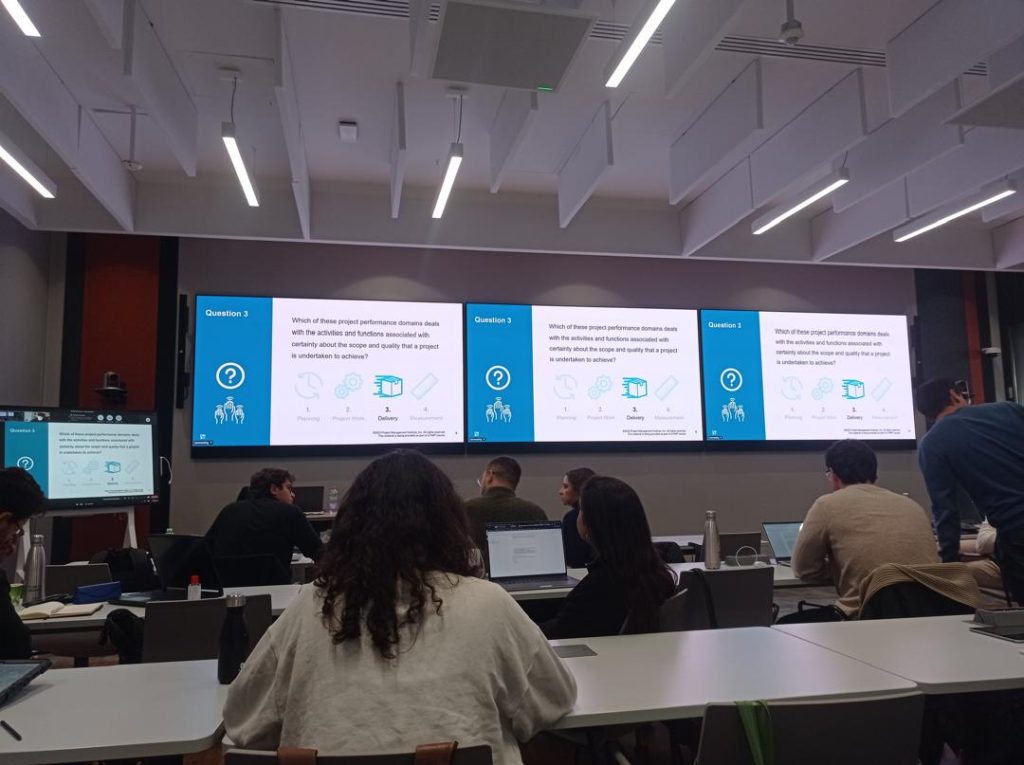
Teaching started from September 2024 to January 2025, mostly at the Navigli Campus along the beautiful canals. Coming from an accounting background, Accounting for Projects and Project Finance felt like meeting old friends who had learned new tricks. Project Risk Management quietly taught me that I had been managing risk for years without ever giving it a register, an owner or a probability. My biggest lesson came from agile vs traditional project management classes. I found these very insightful for my work since research projects are not software sprints, but they also do not have fixed-scope
attributes that project management assumes. Somewhere between the two sits the reality of a five-year global health grant.
Company Visits
Across Italy and the United Kingdom we were visited by a range of organisations and heard directly from the people managing their project portfolios. It was encouraging seeing project management in a European setting especially at one of the big five accounting firms in the world, PwC UK, who gave us real life challenges in their organisation to suggest solutions as a class assignment. Comparing this whole experience against how a donor-funded research consortium operates in Malawi, was one of the most useful comparisons of the degree. The project management vocabulary is the same for both, but their constraints are different.
The Night We Cooked for Each Other
Some of the my most memorable moments during the course of the master’s happened around a kitchen table. My housemates and I organised an international cuisine day where everyone cooked a dish from home and share a little piece of their culture with the group. Like any Malawian would do, the first dish that came to my mind was nsima, this was my opportunity to introduce nsima to the group. My excitement about cooking nsima quickly faded when I started looking for maize flour in Milan, I searched on Google for African shops within my reach, only to discover none had ufa (maize flour). I
almost gave up on the quest, till I found a few grams of corn-flour just enough to make a nsima shape in one of the shops. Finding ufa had become a project with its own constraints. But that little bag was enough and the nsima was happening.
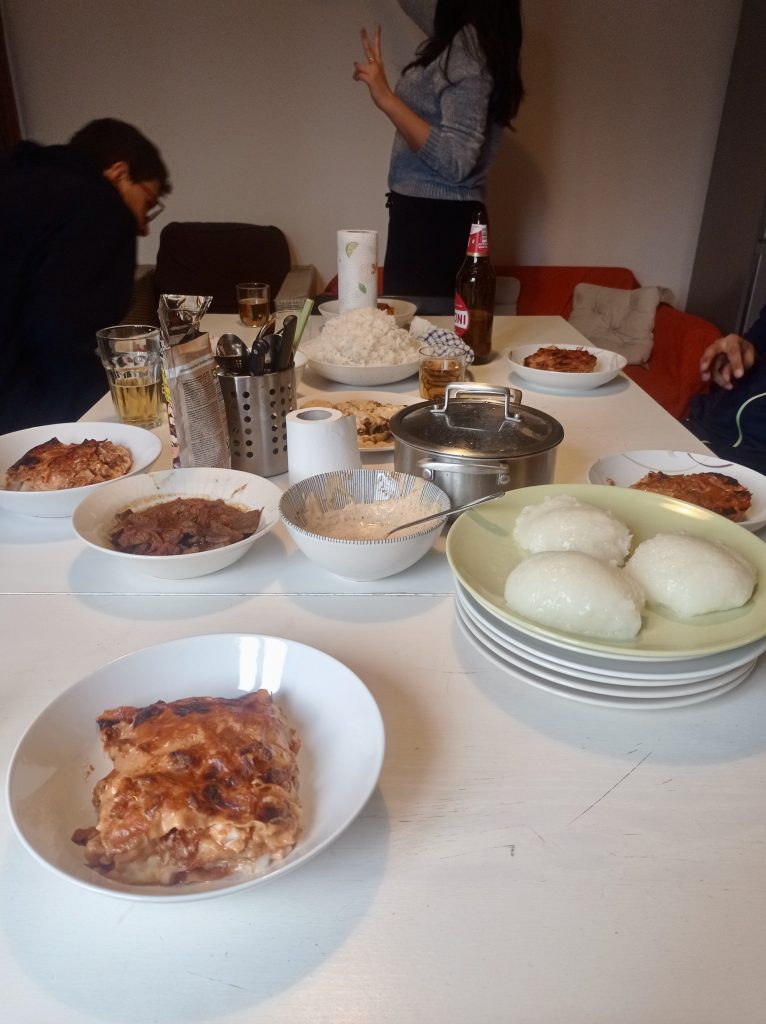
You can teach cross-cultural collaboration in a lecture and boardrooms but you cannot teach it as well as a table where more than 6 people explain what their food is and what occasion it belongs to.
Rome and Bologna
Italy does not let you study in it without also teaching you something.
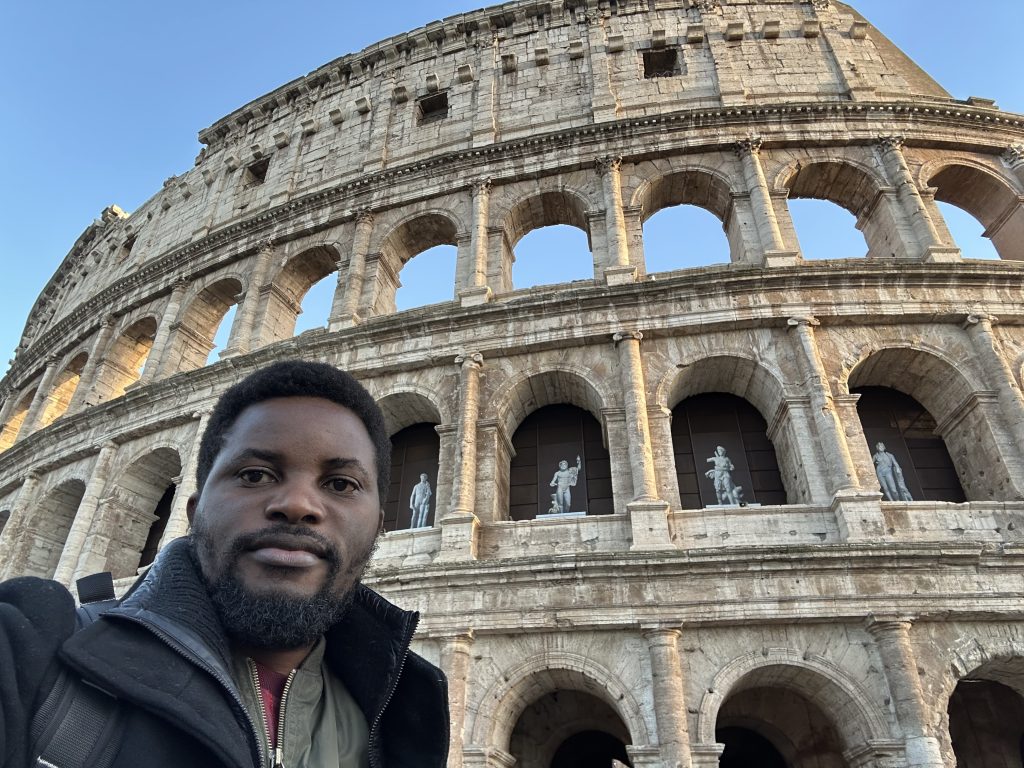
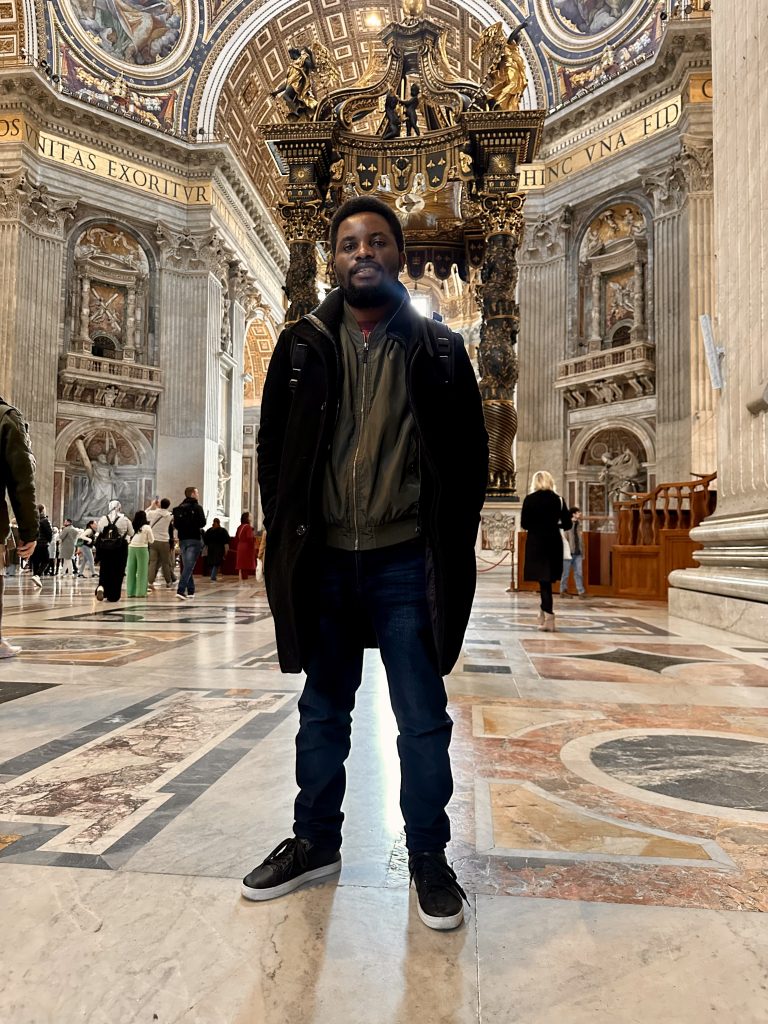
Standing in structures that have outlived every empire that maintained them is strange for someone who thinks about project sustainability for a living. Somebody planned those. Somebody funded them. Somebody handed them over and enough of the handover survived that we still use the buildings as landmarks two thousand years later. Bologna meant more than I expected. Its university, founded in 1088, is the oldest in continuous operation in the world. I am a staff member at a young Malawian university, on a scholarship funded by a research partnership, walking through the porticoes of an institution that has been teaching for nearly a millennium. Universities are the longest-running projects we have.
Glasgow
In February 2025 the cohort relocated to Strathclyde Business School for core courses and electives,
running through to July 2025.
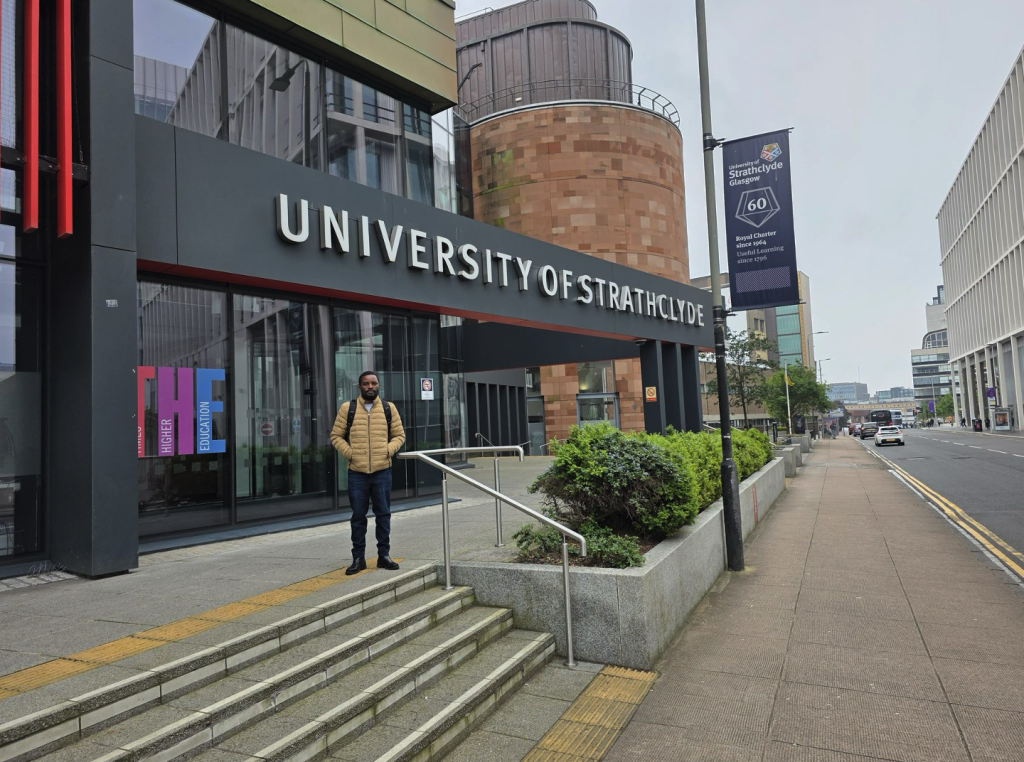
Glasgow was colder and windier. In Milan, usually two layers of clothing were enough; in Glasgow, I quickly learned that I needed to add another layer and keep an umbrella close. The weather was not the only thing that was different, the people seemed friendlier and more familiar. I felt a connection to the city even though this was my first time visiting.
The feeling became stronger when I came across Blantyre street. Knowing Blantyre as my home city back in Malawi, I was curious to visit the place which my city was named after. Seeing something from home reflected in a place thousands of kilometres away, while at the same time discovering that the two places had histories and identities entirely their own.
There was something particularly meaningful about studying at the institution that hosted the research group sponsoring my studentship. The relationship that had previously existed through emails, research meetings, funding arrangements and project documents suddenly became tangible. The funding, the research and the classroom finally shared an address. I was no longer simply connected to Strathclyde through the work I was part of back home; I was now physically there, learning within the same institution that had helped make the journey possible.
Home: The Dissertation
After coursework ended in July 2025 I returned to Malawi for the final project work, which ran from August to February 2026. This was the most valuable part of the eighteen months. Every framework I had learned in Milan and Glasgow now had a live test case on my desk. Risk registers stopped being coursework.
My dissertation was titled “The Impact of Project Management on the Sustainability of Health
Research in Malawi: A Case Study of MUBAS.” The question that almost anyone that has been involved in donor funded has asked is the same. Grants end. Teams disperse. Equipment sits idle. Institutional knowledge walks out the door with the person who held it, but why do some research projects leave a permanent capability behind and others leave
only a final report? The difference is often not scientific quality or funding volume. It is project management maturity: whether there are systems rather than individual brilliance and whether governance, documentation, financial controls and handover are institutional requirements rather than individual habits. Sustainability is not something you add at the end of a project. It is something you design at the start. What I will keep from this is mostly people: a supervisor who asked better questions than I wanted at the time, housemates who ate my nsima without complaint and a research group that decided a project manager in Malawi was worth sending to Milan. None of that fits neatly into a transcript. My thanks toProf Tracy Morse and the NIHR Global Health Research Group for treating capacity building as an investment rather than a compliance box. To the University of Strathclyde and POLIMI Graduate School of Management and to WASHTED at MUBAS for holding my desk. The graduation for the POLIMI certificate will be done in November 2026, bringing an end to this 2 year project. The degree is finished. The work it was funded for is not.
Written by Stevie Amos, 21/08/26 – MUBAS